
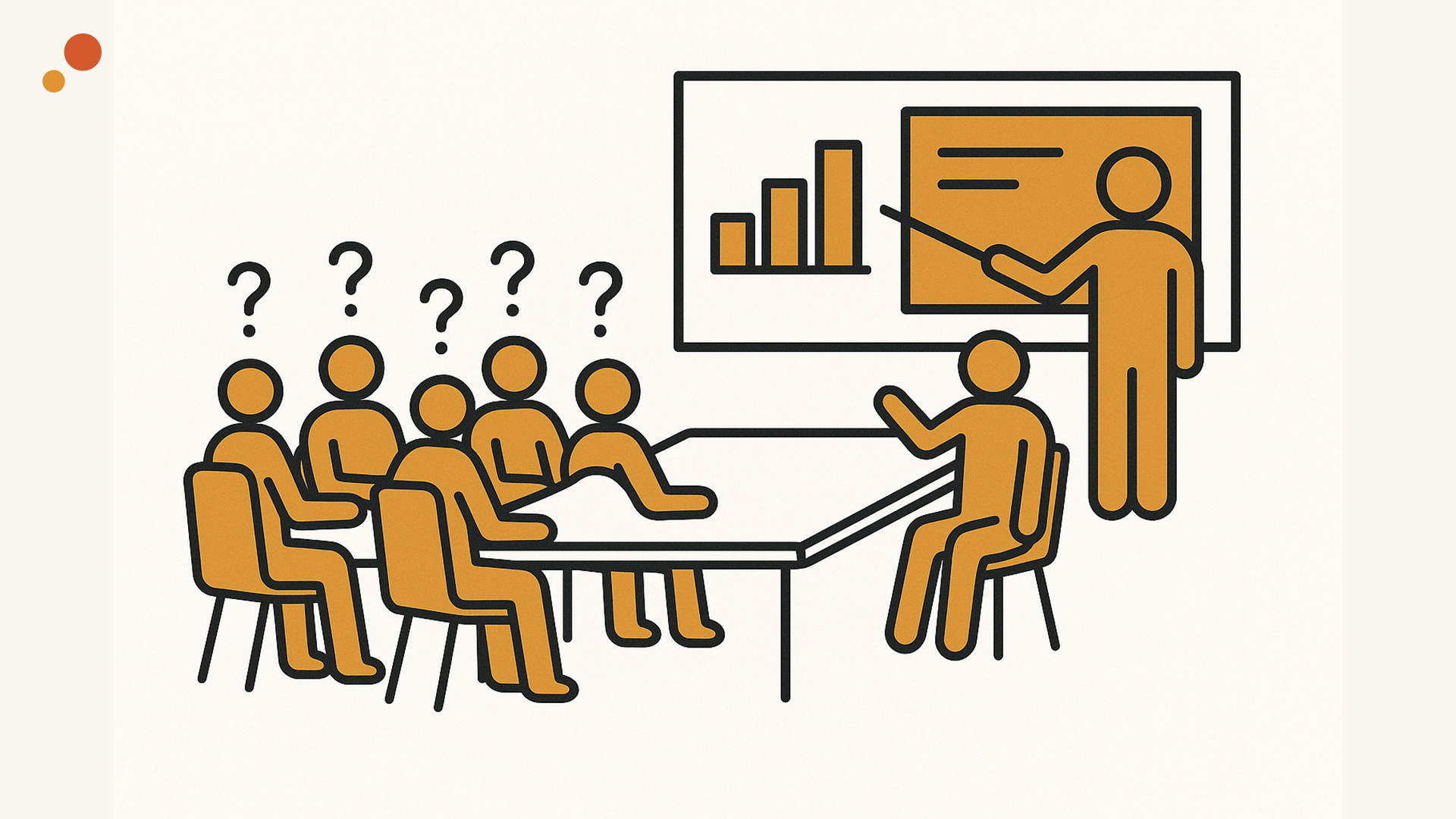
You know the all-hands meeting I’m talking about.
The CEO presents slides. Someone from finance shows revenue charts. Product demos the new feature. HR reminds everyone about open enrollment. Q&A gets three softball questions.
Everyone leaves and goes back to work. Nothing changes.
Two weeks later, you hear someone ask: “Wait, what did leadership say about that again?”
Most company-wide meetings are performance theater (and good quality theatre). Information gets broadcast, but understanding doesn’t happen.
The Broadcast Trap
Here’s what most all-hands meetings get wrong… they optimize for information delivery, not connection.
Leadership thinks: “We need to keep everyone informed.”
So they pack the agenda. Company metrics. Department updates. New initiatives. Policy changes. Everything important that happened this month.
Sixty minutes later, people have been talked at but not talked with. They have more information but not more clarity about what matters.
All-hands meetings fail when they’re one-way broadcasts pretending to be two-way conversations.
What People Actually Need
At seventy-five people across multiple teams and time zones, people are hungry for something different…
They want to understand how their work connects to the bigger picture. They want to hear the reasoning behind decisions, not just the decisions. They want to feel part of something, not informed about something.
The best all-hands meetings I’ve experienced weren’t about information. They were about connection.
The CEO didn’t present polished slides about strategy. They talked through the real trade-offs the leadership team was wrestling with. The reasoning. The uncertainty.
People left those meetings understanding not just what was happening, but why it mattered and how they could contribute.
Making It Work
Company meetings work when they create conversation, not just communication.
Instead of presenting the new strategy, share the context that led to it. The options you considered. What you’re optimizing for and what you’re willing to sacrifice.
Instead of announcing new priorities, explain what you’re stopping to make room. Help people understand the trade-offs.
Instead of showcasing wins, share what you’re learning from what’s not working.
The goal isn’t to look polished. It’s to build shared understanding.
Here’s what companies with effective all-hands do differently…
They keep them short. Forty-five minutes, max. They focus each one on a single theme. Not “here’s everything happening” but “here’s what we’re learning about our customers.”
They make space for real questions. Not the last five minutes. Real time for people to process and respond.
They follow up with resources, not recordings. Key decisions documented. Context shared. Next steps clear.
Beyond the Meeting
The all-hands isn’t where alignment happens. It’s where alignment starts.
The companies that make it work use all-hands to spark conversations that continue in teams, in Slack, in one-on-ones.
Your engineering lead leaves the all-hands and talks with their team about what the customer priorities mean for technical decisions. Your sales manager connects the company goals to how they’re coaching their people.
All-hands becomes the starting point, not the ending point.
What Changes
Stop trying to cover everything. Pick one thing that matters and go deep.
Stop presenting perfect narratives. Share the messy reality of how decisions actually get made.
Stop making it one-directional. If people aren’t asking questions, you’re doing it wrong.
Start with why before what. Start sharing what’s not working, not just what is. Start asking your team what they need from all-hands.
The Real Purpose
All-hands meetings aren’t about keeping everyone informed. They’re about keeping everyone connected to what matters most.
People don’t need another status update. They need to understand how their work fits into the bigger picture. They need to feel part of decisions, not just recipients of them.
The best all-hands meetings make people leave thinking: “I understand what we’re doing and why it matters. I see how my work connects.”
The worst make people leave thinking: “That’s an hour I’ll never get back.”
All-hands meetings are either a force for alignment or an hour of everyone’s time that could’ve been an email.
There’s no in between.