
I was on a call recently with a CEO who’d been using AI to build training content… and they were terrified it was teaching their people the wrong things.
Not because of lesson accuracy. Because of inherent bias.
They’d asked ChatGPT to create onboarding materials about customer communication. What came back was technically correct… but completely wrong for their company.
The tone was formal. The approach was transactional. The examples felt generic.
Their company’s entire culture is built on being warm, personal, and unconventional. None of that showed up.
This is the problem nobody’s talking about. AI trained on the entire internet knows everything and nothing about your company.
The Generic AI Problem
ChatGPT can write policies, create training materials, draft processes, build frameworks.
But it’s all vanilla.
It doesn’t know that your engineering team makes decisions through async RFCs, not meetings. It doesn’t understand that your customer success philosophy is “fix it first, ask permission later.” It can’t capture why your values say “thoughtful urgency” instead of “move fast and break things.”
When you use generic AI to create company content, you’re training your people on how the internet thinks companies should work… not how your company actually works.
What Gets Lost
Your company has institutional intelligence that doesn’t exist anywhere else.
The lessons from that product launch that almost failed. Why you structure teams the way you do. The unwritten rules about how things really get done.
This intelligence lives in people’s heads, in old Slack threads, in stories told during onboarding.
When someone leaves, some of that intelligence walks out the door with them.
When you’re using generic AI, none of it gets captured or transferred.
The Training Problem
Most companies use AI as a productivity tool… “Help me write this faster.”
But AI’s real potential isn’t speed. It’s scalability of institutional knowledge.
The senior engineer who knows why the architecture is designed this way can’t personally onboard every new hire. The customer success lead who understands your philosophy can’t mentor everyone.
But AI trained on your company’s specific knowledge? That can scale.
Building Your Intelligence Layer
When we built Elliott at Dosen, the goal wasn’t just to make programs faster to create. It was to make them native to each organization.
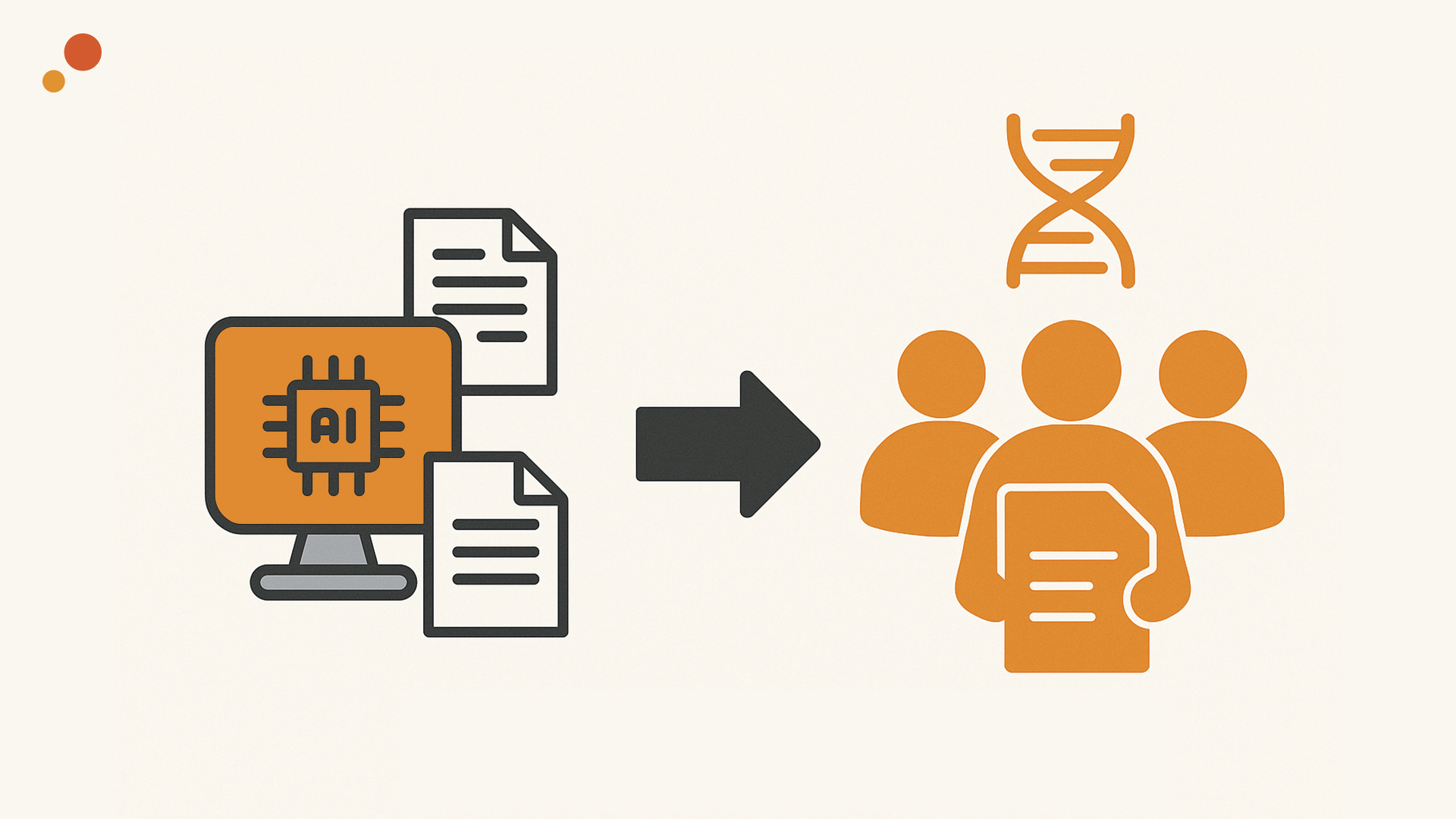
Elliott learns from your company’s actual documents, processes, and materials. Then combines that with outside best practices to create learning that feels like it came from inside your company.
Because it did.
When Elliott builds an onboarding program, it’s weaving together your mission, your values, your actual processes, your real team structure, your specific ways of working.
The output doesn’t just sound professional. It sounds like you.
What This Looks Like
Training AI on your company’s DNA isn’t about feeding it everything and hoping for the best.
It’s about being intentional. What documents actually represent how you work? What stories capture your culture? What processes define your approach?
You’re building a learning system that understands context, not just content.
When someone asks how decisions get made at your company, they don’t get a generic framework. They get your actual decision-making process, with examples from your history.
The Bias You Want
That CEO was worried about bias, but they actually wanted bias. They just wanted the right bias.
They wanted AI biased toward their values, their approach, their culture. They wanted their institutional intelligence embedded in everything it created.
Generic AI gives you generic answers. AI trained on your company gives you your answers.
Beyond Documentation
This isn’t just about creating better training materials. It’s about protecting and scaling what makes your company work.
When your best manager leaves, what happens to everything they knew? When your top salesperson moves on, where does their understanding go?
Right now, most of that knowledge disappears.
But AI trained on your institutional intelligence? That knowledge stays. Gets refined. Gets transferred to everyone who needs it.
Making It Work
You don’t need perfect documentation to start. You need real artifacts that represent how you actually work.
The presentation your CEO gives to new hires. The decision doc from your biggest product pivot. The principles that actually guide behavior, not the values poster nobody reads.
Feed AI the real stuff… messy, specific, authentically yours. That’s where the intelligence is.
What This Changes
When AI understands your company specifically, everything shifts.
Onboarding isn’t generic. Training doesn’t feel corporate. New hires don’t spend six months figuring out the unwritten rules… because the rules aren’t unwritten anymore.
Your institutional intelligence becomes an asset you can scale.
The Alternative
Keep using generic AI and you’ll keep getting generic results. Content that sounds professional but feels wrong. Training that covers the basics but misses what matters.
Or build AI that learns from you. That understands your DNA. That scales your institutional intelligence.
The choice isn’t whether to use AI at work. It’s whether to use AI that knows your work.